Vitreous hemorrhage is a serious eye condition that can affect vision and overall eye health. At Dr Harsh Inder Retina Center, we prioritize early diagnosis and safe, effective treatment to preserve your sight. In this blog, we’ll explain what vitreous hemorrhage is, its causes, symptoms, treatment options, and ways to protect your eyes.
What Is Vitreous Hemorrhage?
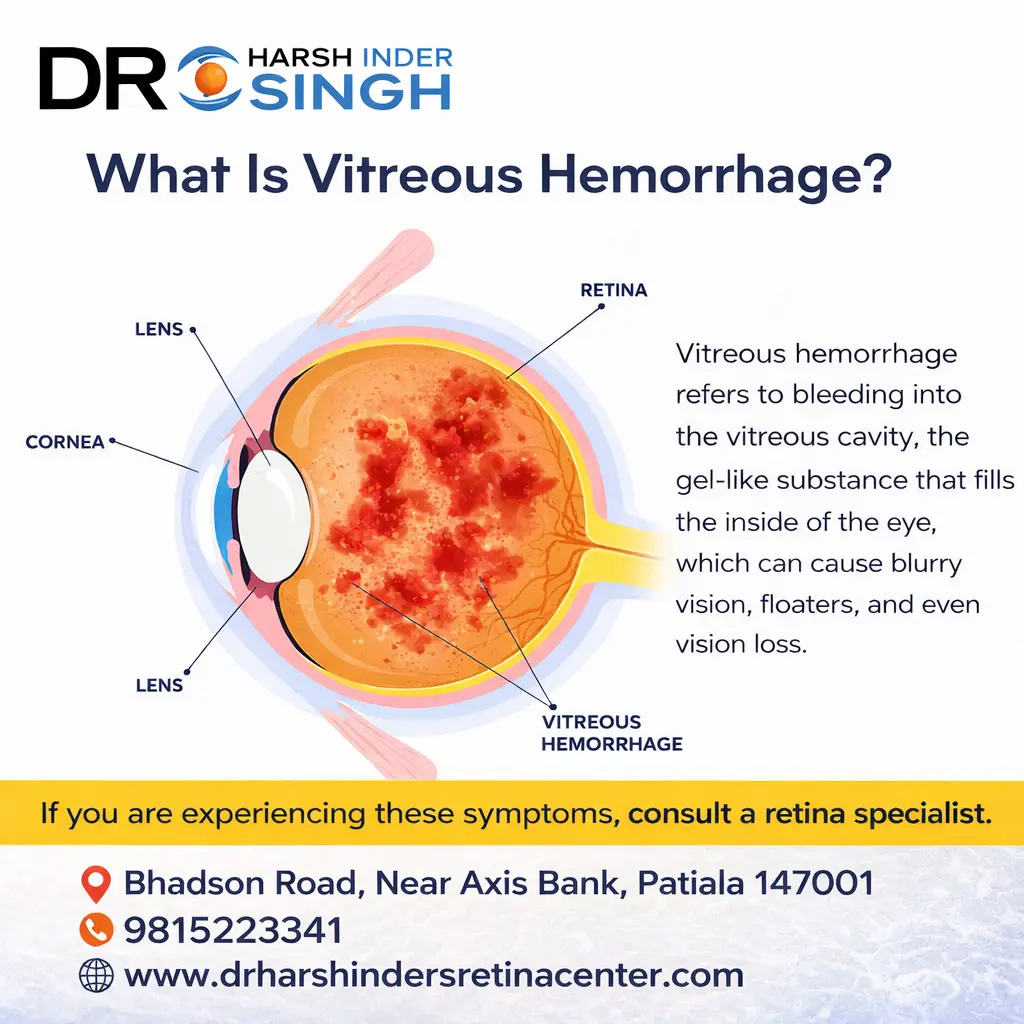
Vitreous hemorrhage refers to bleeding inside the eye, specifically in the vitreous humor, the clear gel that fills the space between the lens and retina. This bleeding can obstruct vision and may indicate an underlying retinal problem.
Key points:
- Often appears as dark spots, floaters, or a red tint in vision
- Can affect one or both eyes
- Usually associated with retinal tears, diabetic eye disease, or trauma
What Are the Common Causes of Vitreous Hemorrhage?
Understanding vitreous hemorrhage causes is crucial for prevention and timely treatment. Common causes include:
Cause | How It Leads to Bleeding |
Diabetic Retinopathy | Abnormal blood vessels grow and bleed into the vitreous humor |
Retinal Tear or Detachment | Tears in the retina allow blood to leak into the vitreous |
Eye Trauma | Direct injury to the eye damages blood vessels |
Retinal Vein Occlusion | Blocked retinal veins increase pressure, causing vessel rupture |
Age-Related Eye Conditions | Certain degenerative conditions can weaken blood vessels |
Early detection of the underlying cause can prevent permanent vision loss.
What Are the Symptoms of Vitreous Hemorrhage?
Recognizing vitreous hemorrhage symptoms helps in seeking prompt medical care. Typical signs include:
- Sudden appearance of floaters (small dark shapes drifting in vision)
- Blurred or cloudy vision
- Red tint in vision or seeing blood streaks
- Shadows or “curtains” over part of vision
- Difficulty seeing in low-light conditions
If you notice any of these symptoms, contact Dr Harsh Inder Retina Center immediately. Early intervention can save your vision.
How Is Vitreous Hemorrhage Diagnosed?
Diagnosis usually involves a thorough eye examination:
- Visual Acuity Test – Measures the clarity of your vision
- Ophthalmoscopy – Specialist examines the retina and vitreous
- Ultrasound Imaging – Detects blood and retinal detachment if the view is obscured
- Fluorescein Angiography – Evaluates retinal blood flow and vessel damage
Accurate diagnosis is essential to determine the cause and the most appropriate treatment plan.
What Are the Treatment Options for Vitreous Hemorrhage?
Vitreous hemorrhage treatment depends on severity, cause, and patient health. Options include:
1. Observation
- Minor hemorrhages may resolve on their own within weeks
- Regular follow-up exams to monitor healing
2. Medications
- Anti-VEGF injections for bleeding due to diabetic retinopathy
- Steroid injections to reduce inflammation
3. Laser Therapy
- Seals leaking blood vessels
- Prevents further bleeding in specific retinal conditions
4. Vitrectomy
- Surgical removal of blood from the vitreous
- Often used in severe or persistent hemorrhages
- Improves vision and prevents complications
Your retina specialist at Dr Harsh Inder Retina Center will recommend the safest and most effective treatment for your condition.
Are There Risks or Complications?
Untreated vitreous hemorrhage may lead to:
- Permanent vision loss
- Retinal detachment
- Glaucoma
- Recurrent bleeding
Prompt medical attention reduces these risks significantly.
How Can You Prevent Vitreous Hemorrhage?
Prevention focuses on maintaining eye health and managing underlying conditions:
- Control diabetes and hypertension
- Protect eyes from trauma
- Get regular retinal check-ups, especially if you have risk factors
- Avoid smoking and maintain a healthy lifestyle
Consult a Retina Specialist Today
If you experience symptoms of vitreous hemorrhage, early evaluation by a retina specialist can protect your vision. At Dr Harsh Inder Retina Center, we provide expert diagnosis and advanced treatments tailored to your needs.
📞 Call us to schedule your consultation and take the first step toward clear, healthy vision.