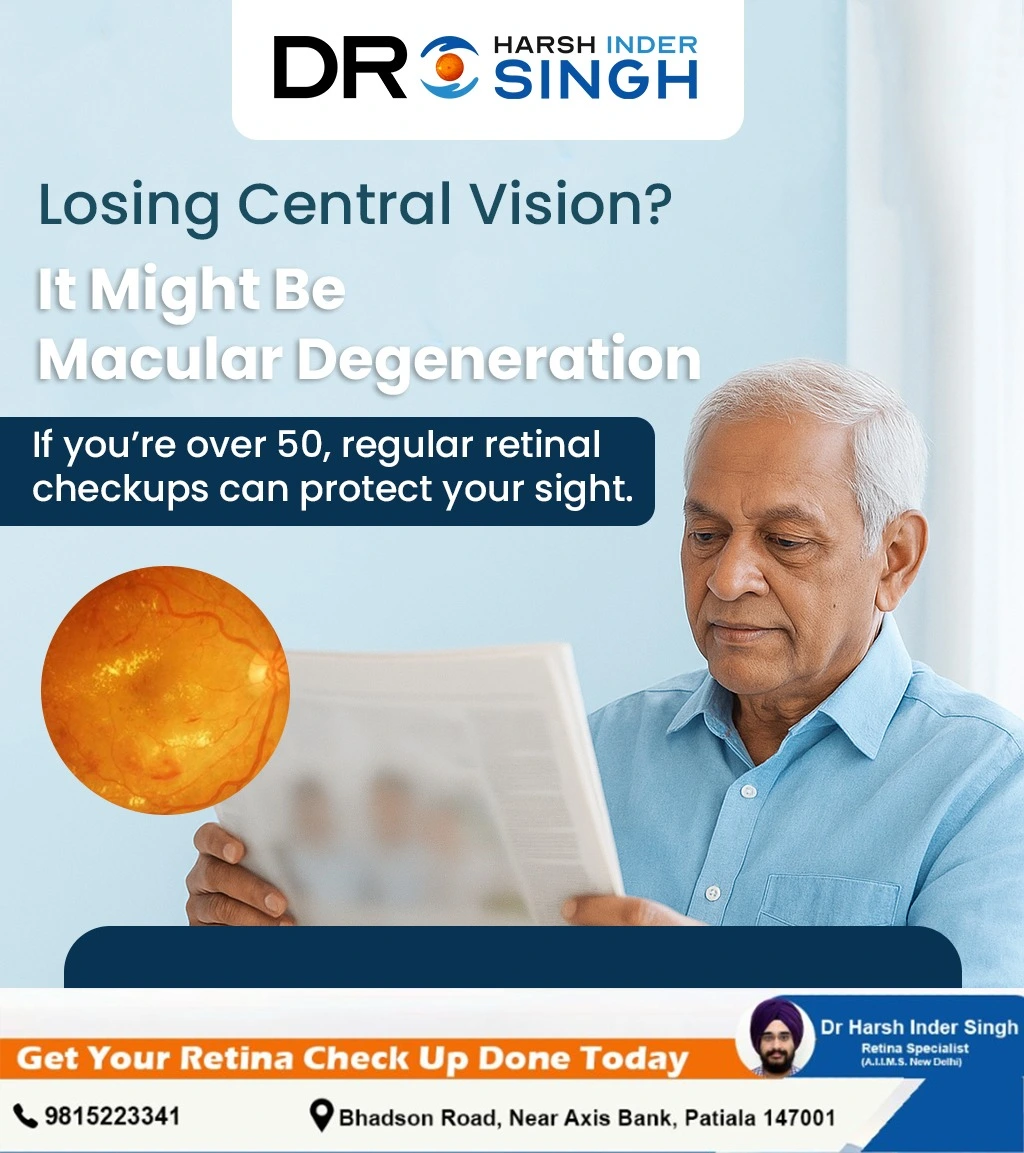
Age-related vision problems are becoming more common as people live longer. One of the leading causes of vision loss in older adults is Age-Related Macular Degeneration (ARMD). Many patients first notice difficulty reading, recognizing faces, or seeing details clearly. These problems often occur due to central vision loss in ARMD, which affects the most important part of your vision.
Understanding why this happens, what symptoms to watch for, and how treatment can help is essential for protecting long-term eye health.
At Dr Harsh Inder Retina Center, specialists focus on early detection and advanced retina care to help patients manage macular degeneration and preserve their vision.
What Is Age-Related Macular Degeneration (ARMD)?
Age-Related Macular Degeneration (ARMD or AMD) is a retinal disease that affects the macula, the small central area of the retina responsible for sharp and detailed vision.
The macula allows you to:
- Read books or mobile screens
- Recognize faces
- Drive safely
- See fine details clearly
When the macula becomes damaged, it leads to central vision loss in ARMD, while peripheral (side) vision usually remains intact.
This condition most commonly affects people over the age of 50 and progresses gradually, though some forms can worsen more rapidly.
Why Does Central Vision Loss Occur in ARMD?
Central vision loss happens because ARMD damages the macula. When this part of the retina stops functioning properly, the brain cannot process clear images from the center of the visual field.
Several biological changes contribute to this process:
1. Build-Up of Drusen
Small yellow deposits called drusen accumulate under the retina. These deposits interfere with the normal functioning of retinal cells.
2. Degeneration of Macular Cells
Over time, the light-sensitive cells in the macula gradually deteriorate, leading to blurred or distorted central vision.
3. Abnormal Blood Vessel Growth
In some cases, abnormal blood vessels grow under the retina. These vessels may leak blood or fluid, damaging the macula quickly.
4. Retinal Tissue Damage
The leaking fluid or progressive degeneration disrupts the retinal layers responsible for central vision clarity.
This damage explains why AMD central vision symptoms appear and gradually worsen without timely treatment.
What Are the Common Symptoms of Central Vision Loss in ARMD?
The early stages of ARMD may not cause noticeable symptoms. However, as the disease progresses, patients may begin experiencing problems with central vision.
Common AMD central vision symptoms include:
- Blurred or fuzzy central vision
- Straight lines appearing wavy or distorted
- Difficulty reading small text
- Dark or blank spots in the center of vision
- Trouble recognizing faces
- Reduced contrast sensitivity
- Colors appearing less bright
Many patients describe it as looking at something through a smudged or blurry spot in the middle of their vision.
Early detection is extremely important because treatment can slow the progression of the disease.
Dry AMD vs Wet AMD: What Is the Difference?
Understanding dry AMD vs wet AMD helps patients know why some cases progress slowly while others require urgent treatment.
Feature | Dry AMD | Wet AMD |
Frequency | Most common (about 80–90%) | Less common but more severe |
Progression | Gradual | Faster vision loss |
Cause | Thinning of macula and drusen buildup | Abnormal blood vessel growth |
Symptoms | Mild to moderate central vision loss | Sudden distortion or severe vision loss |
Treatment | Monitoring, lifestyle changes, supplements | Eye injections, laser treatments |
Dry AMD may progress slowly over several years. Wet AMD, however, can cause rapid central vision damage, which requires immediate medical care.
Who Is at Risk of Developing ARMD?
Several factors increase the risk of developing ARMD and experiencing central vision loss in ARMD.
Major risk factors include:
- Age above 50 years
- Family history of macular degeneration
- Smoking
- High blood pressure
- High cholesterol levels
- Obesity
- Excessive exposure to sunlight
- Poor nutrition
People with these risk factors should undergo regular retinal examinations to detect changes early.
How Is ARMD Diagnosed?
Early diagnosis plays a critical role in protecting vision.
Retina specialists typically use the following tests:
Comprehensive Eye Examination
A detailed retinal evaluation helps identify early signs of macular damage.
Optical Coherence Tomography (OCT)
This imaging test provides high-resolution cross-section images of the retina and detects fluid accumulation.
Fundus Photography
High-quality photographs of the retina help monitor disease progression.
Amsler Grid Test
This simple grid test helps detect visual distortion caused by macular damage.
At Dr Harsh Inder Retina Center, advanced retinal imaging technologies help specialists detect ARMD in its early stages.
What Treatments Are Available for ARMD?
While ARMD cannot always be completely cured, modern treatments can slow disease progression and preserve remaining vision.
Treatment depends on the stage and type of ARMD.
1. Anti-VEGF Injections
These medications block abnormal blood vessel growth in wet AMD and are one of the most effective treatments available.
2. Retinal Laser Therapy
Laser treatment may be used in certain cases to seal leaking blood vessels.
3. Nutritional Supplements
Specific vitamins and antioxidants recommended in AREDS formulations may help slow progression in moderate ARMD.
4. Low Vision Aids
Devices such as magnifiers and specialized glasses help patients maintain independence in daily activities.
5. Lifestyle Modifications
Healthy habits can slow disease progression.
Can ARMD Be Prevented?
Although ARMD cannot always be prevented, certain lifestyle changes may reduce the risk of developing severe disease.
Preventive tips include:
- Stop smoking
- Eat a diet rich in leafy green vegetables
- Include omega-3 fatty acids in your diet
- Maintain healthy blood pressure and cholesterol levels
- Protect your eyes from UV sunlight
- Schedule regular eye examinations after age 50
Early diagnosis remains the most important factor in preventing severe central vision damage.
When Should You See an Eye Specialist?
You should consult an eye specialist immediately if you notice:
- Sudden blurring of central vision
- Distorted straight lines
- Dark spots in the center of vision
- Difficulty recognizing faces
- Rapid changes in vision clarity
Timely evaluation by a retina specialist can help prevent permanent vision loss.
Specialized Retina Care
Patients seeking expert evaluation and treatment can explore Age Related Macular Degeneration Services in Patiala for advanced retina care and personalized management options.
At Dr Harsh Inder Retina Center, specialists provide comprehensive diagnosis, monitoring, and treatment for macular degeneration using modern retinal technologies.
Protect Your Vision with Early Retina Care
Central vision is essential for daily activities like reading, driving, and recognizing loved ones. If you experience symptoms related to central vision loss in ARMD, early medical attention can make a significant difference.
The retina specialists at Dr Harsh Inder Retina Center provide comprehensive evaluation and advanced treatment options for macular degeneration.
Schedule a professional eye examination today to safeguard your vision and maintain long-term eye health.